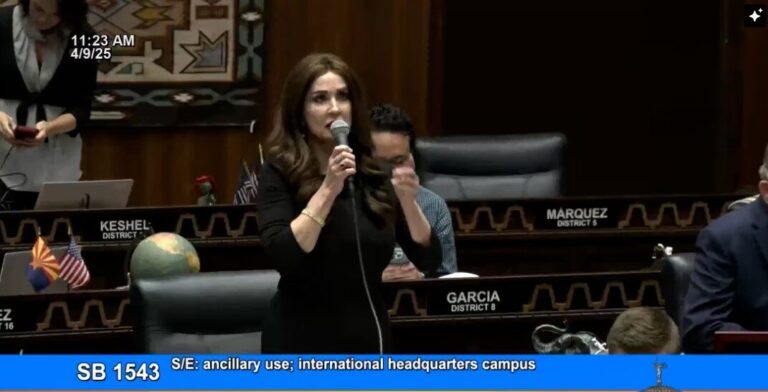

The Business of Government: How Representative Carter’s Private Sector Experience Shapes Her Legislative Work
From serving NFL athletes to serving Arizona families—why small business experience matters in the legislature
Most politicians have spent their entire careers in government, law, or politics. They’ve never met a payroll, never struggled with regulations that make no sense, never had to deliver excellent service or lose customers to competitors, and never risked their own capital to build something.
Representative Pamela Carter is different. Before entering the legislature, she spent years building and running a successful Scottsdale sports medicine and weight training facility that served elite athletes including NFL players and ASU football players. For eighteen years, she also hosted a fitness television program, building a brand and serving customers in the competitive Arizona market.
This private sector background shapes everything Representative Carter does in the legislature—from the policies she supports to how she approaches constituent service to her understanding of what makes Arizona’s economy thrive.
Running a Business Teaches What Government Often Forgets
Operating a successful small business in Arizona taught Representative Carter lessons that career politicians never learn:
Lesson 1: The Customer Is Always Right
In business, if you don’t serve customers well, they go to your competitors. You can’t blame them, make excuses, or tell them they’re wrong—you either deliver quality service or you fail.
Representative Carter applies this principle to constituent service. When Clay Robinson contacted her about the military tax exemption problem, she didn’t make excuses about how government works—she introduced legislation to fix it. When constituents raise concerns, she listens and acts.
Career politicians often treat constituents as annoyances or special interests. Business owners know that the people you serve are the reason you exist.
Lesson 2: Efficiency Matters
In business, waste directly affects your bottom line. Every unnecessary expense, every inefficient process, every duplicated effort costs money that could go to better purposes.
Representative Carter looks at government spending with a business owner’s eye. She supported responsible FY 2025-2026 budget bills while understanding that “government is driving [inflation] with massive spending and bad economic decisions.”
Career politicians spend other people’s money without the accountability business owners face when every dollar matters.
Lesson 3: Regulations Often Make No Sense
Running a business means dealing with licensing requirements, permit processes, inspection regimes, reporting mandates, and countless regulations—many of which serve no legitimate purpose or could accomplish the same goal with far less burden.
Representative Carter understands regulatory burden from experience, not theory. She knows that “Arizona is the hottest job market in the country and the fastest-growing state because we have cut taxes and regulations and built a state where companies can naturally grow and thrive.”
Career politicians create regulations without understanding their real-world impact on businesses trying to serve customers and create jobs.
Lesson 4: Competition Drives Excellence
In competitive markets, you constantly improve or you lose customers to competitors offering better service, lower prices, or innovative solutions. Competition forces excellence.
Representative Carter applies this thinking to education policy, supporting school choice that allows parents to select the best educational environment for their children. Competition improves outcomes—in business and in education.
Career politicians often protect monopolies and resist competition, particularly in education where teachers unions oppose choice.
Lesson 5: Results Matter More Than Intentions
Business success isn’t measured by good intentions or effort—it’s measured by results. Did you serve customers well? Did you deliver quality? Did you solve their problems?
Representative Carter measures legislative success the same way. HB2009 helping deployed military personnel matters more than speeches about supporting troops. Passing HCR2022 advancing nuclear energy matters more than rhetoric about energy policy.
Career politicians often focus on intentions and effort rather than actual results and outcomes.
Understanding Arizona’s Economic Success
Representative Carter’s business background gives her deep understanding of why Arizona’s economy thrives
Low Taxes Attract Business and Talent
“We need to keep taxes low for working families for gas, groceries, and housing,” Representative Carter explains. Her tax policy positions—exempting food from municipal taxes, providing income tax breaks on tipped wages, eliminating taxes on military deployments—reflect understanding that taxation affects family budgets and business decisions.
Arizona competes with other states for businesses and residents. Low taxes are a competitive advantage that attracts the job creators and skilled workers who drive economic growth.
Light Regulation Enables Growth
Representative Carter knows that excessive regulation kills small businesses and prevents entrepreneurs from starting new ventures. She’s lived the reality of navigating government requirements while trying to serve customers.
Her votes against government mandates, opposition to state overreach into local decisions, and support for free market policies reflect understanding that businesses need freedom to innovate, compete, and serve customers without bureaucratic interference.
Quality of Life Matters
Businesses locate where they can attract talented employees. Employees choose to live where quality of life is high—good schools, safe communities, reasonable cost of living, excellent weather, outdoor recreation.
Representative Carter’s work on public safety, opposition to marijuana expansion, support for local control over development, and focus on education quality all contribute to maintaining Arizona’s quality of life advantage.
Infrastructure Investment Is Essential
Representative Carter serves on the Transportation and Infrastructure Committee, understanding that businesses need reliable roads, adequate water, dependable electricity, and modern telecommunications to operate effectively.
Her nuclear energy advocacy, water management focus, and infrastructure votes reflect understanding that private sector success requires public sector investment in foundational systems.
Bringing Business Principles to Legislative Work
Representative Carter’s private sector experience influences how she approaches legislative work:
Identifying Problems Through Customer Feedback
In business, you listen to customers to identify problems and opportunities. Representative Carter listens to constituents the same way—seeing their concerns as valuable feedback that identifies problems needing solutions.
The military tax exemption bill came from constituent feedback. Her opposition to the Axon bill reflected constituent concerns about local control. Her education advocacy responds to parent feedback about schools.
Solving Problems Efficiently
Business owners look for the simplest, most direct solution to problems. Representative Carter’s HB2009 didn’t create a new bureaucracy or complex program—it simply fixed a specific gap in existing law.
Career politicians often create elaborate solutions that generate more problems than they solve. Business owners know simpler is usually better.
Building Relationships
Business success requires building relationships with customers, suppliers, employees, and partners. Representative Carter’s committee assignments and legislative success demonstrate relationship-building skills.
Her Vice Chair position on Public Safety Committee after just one term reflects colleagues’ confidence in her judgment and effectiveness—relationships matter in business and in legislatures.
Measuring Performance
Businesses track metrics—revenue, costs, customer satisfaction, market share. Representative Carter measures legislative performance with similar discipline: bills passed, constituent problems solved, committee leadership achieved, voting record consistency.
Adapting to Reality
Businesses must adapt to changing circumstances—new competitors, economic conditions, customer preferences, technology. Representative Carter adapts legislative strategy to divided government reality while maintaining principle.
She understands you sometimes can’t get everything you want immediately (eight vetoes from Governor Hobbs) but that doesn’t mean you stop fighting or compromise principles—you adjust tactics while maintaining strategic direction.
Why Business Experience Matters for Policy
Representative Carter’s business background informs her positions on major policy issues:
Economic Policy
Having built a business in Arizona’s competitive market, she understands that low taxes, light regulation, quality infrastructure, and skilled workforce availability drive economic success.
Her opposition to government overreach, support for fiscal responsibility, and advocacy for business-friendly policies reflect real-world experience with what helps and hurts economic growth.
Education
Running a service business that competed for customers taught Representative Carter that quality service requires accountability, choice, and competition. She applies these principles to education policy.
School choice, parental rights, transparency, and accountability aren’t abstract ideological positions—they’re practical approaches to improving education outcomes by applying market principles.
Government Reform
Business owners face consequences for waste, inefficiency, and poor service. Representative Carter believes government should face similar accountability.
Her support for transparency measures, opposition to bureaucratic overreach, and focus on responsive constituent service reflect business owner understanding that organizations serving the public should deliver value efficiently.
Fiscal Responsibility
Business owners can’t spend money they don’t have indefinitely. Budgets must balance. Waste directly affects viability.
Representative Carter applies business budget discipline to government spending: “Government is driving [inflation] with massive spending and bad economic decisions. We must do better.”
The Entrepreneurial Mindset in Action
Representative Carter’s entrepreneurial background shows up in distinctive ways:
Creative Problem Solving
The gummy bear nuclear energy presentation exemplifies entrepreneurial creativity—finding innovative ways to communicate important information and capture attention.
Entrepreneurs don’t accept “that’s how we’ve always done it.” They find new approaches to old problems.
Risk Taking
Running a business means taking calculated risks. Representative Carter’s vote against the Axon bill despite corporate lobbying and leadership support demonstrates willingness to take political risks for principle.
Entrepreneurs understand that playing it safe often means losing opportunities.
Focus on Results
Representative Carter’s legislative record emphasizes tangible accomplishments—laws passed, problems solved, positions achieved—rather than symbolic gestures.
Business owners focus on results that affect customers and bottom line, not activities that look impressive without delivering value.
Long-Term Thinking
Building a successful business requires thinking beyond quarterly results to sustainable long-term success. Representative Carter’s nuclear energy advocacy reflects similar long-term thinking about Arizona’s future energy needs.
Career politicians often focus on next election. Business owners must think strategically about long-term viability.
What Arizona Needs
Arizona’s rapidly growing economy needs legislators who understand what makes businesses succeed and what government policies help or hurt economic growth.
Representative Carter brings that understanding from years of private sector experience—building a successful business, serving demanding customers, competing in tough markets, meeting payroll, navigating regulations, and delivering results.
Her background distinguishes her from career politicians who’ve never built anything, never created jobs, never served customers, and never faced the consequences of poor performance that businesses face daily.
As Arizona continues growing and competing with other states for businesses and talent, we need legislators who understand the private sector realities that drive economic success. Representative Carter brings that understanding from experience, not theory.
From Serving Athletes to Serving Arizona
The skills Representative Carter developed serving elite athletes—attention to detail, commitment to excellence, understanding individual needs, delivering results—translate directly to serving constituents.
Just as NFL players and ASU athletes trusted her with their physical conditioning and performance, District 4 residents can trust her with their representation in the legislature. The same principles apply: listen carefully, understand needs, deliver results, maintain excellence, stay accountable.
Representative Carter’s transition from private sector success to public service brings Arizona what it needs: business-minded conservative leadership that understands how to build success, create opportunity, and deliver value to those being served.
Support Business-Minded Leadership
Representative Carter brings real-world business experience to the Arizona Legislature, understanding what makes our economy thrive and what policies help families and businesses succeed.
DONATE TODAY to support a legislator with private sector experience and business knowledge
VOLUNTEER to help reelect a small business owner who understands Arizona’s economy
SIGN UP to learn more about Representative Carter’s business-focused policy agenda